

Semi Commercial Trucks
What Are Semi Truck Tires Called?
May
What Are Semi Truck Tires Called?
When you see a semi-truck barreling down the highway, you might notice its massive tires designed to carry huge loads across long distances. But have you ever wondered what these tires are specifically called? Semi truck tires, also known as 18-wheeler tires or big rig tires, are much more than just rubber; they are complex, highly engineered components that play a critical role in the safety and efficiency of commercial trucking.
The tire structure and type vary depending on where the tire is placed on the truck. Semi trucks are large vehicles that typically require different tires for different functions. Broadly speaking, there are three types of tires on a semi-truck: steer tires, drive tires, and trailer tires. Each of these tires has a unique function and design, tailored to meet the specific needs of the vehicle’s operation.
Types of Semi Truck Tires
1. Steer Tires
Steer tires are mounted on the front axle of a semi-truck and are responsible for providing the necessary traction and stability for steering. These tires must be durable and responsive to ensure the driver can maintain control of the vehicle while driving, especially at high speeds or during tight turns.
Steer tires typically have a tread pattern designed to enhance directional stability and reduce rolling resistance, which improves fuel efficiency. The tread on steer tires is generally more shallow than that of other types, as they are primarily designed for steering, not heavy traction.
Key Characteristics:
- Located on the front axle.
- Responsible for vehicle steering.
- Prioritize traction, durability, and handling.
2. Drive Tires
Drive tires are positioned on the rear axles of the semi-truck and are crucial for providing the power needed to move the vehicle. These tires play a vital role in transferring engine power to the road, enabling the truck to pull its massive weight. Unlike steer tires, drive tires have deeper, more aggressive tread patterns to enhance traction, particularly in adverse weather conditions like rain or snow.
The performance of drive tires is essential for maintaining safety, particularly when transporting heavy cargo on challenging road surfaces. Due to the intense force and weight placed on them, these tires must be able to withstand significant wear and tear.
Key Characteristics:
- Positioned on the rear axles.
- Provide propulsion and traction for moving the vehicle.
- Designed with deep treads to enhance grip and performance.
3. Trailer Tires
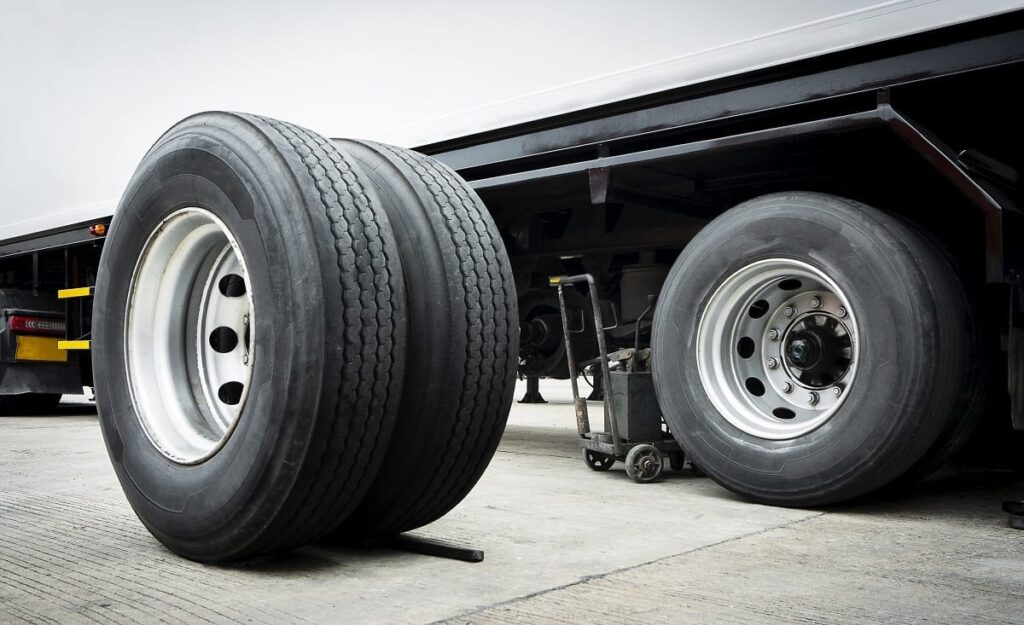
As the name suggests, trailer tires are used on the trailer portion of a semi-truck. They are designed to carry the weight of the cargo and ensure that the trailer moves smoothly behind the truck. While they do not contribute to steering or propulsion, trailer tires are still an essential part of the vehicle. These tires are designed to handle the heavy load of the trailer and distribute the weight evenly.
Trailer tires usually have a more basic tread design than drive tires since they don’t need to handle the same level of traction. However, they still need to be robust and durable to support the weight of the load over long distances.
Key Characteristics:
- Mounted on the trailer portion of the truck.
- Support the cargo being transported.
- Built to handle heavy loads and ensure smooth movement.
How Do Semi Truck Tires Differ from Regular Tires?
Unlike regular car tires, semi truck tires are specifically designed to bear the immense weight of a fully loaded 18-wheeler truck. A typical semi truck can weigh up to 80,000 pounds when fully loaded, and the tires need to withstand not only the weight but also the stresses from high-speed travel and extended hours on the road.
Semi truck tires are built to last much longer than regular vehicle tires. They are constructed with strong, thick rubber and feature a multi-layer design for maximum durability. While regular tires might last anywhere from 25,000 to 50,000 miles, semi truck tires are often designed to last well over 100,000 miles, depending on maintenance and road conditions.
Additionally, semi truck tires are also subjected to more rigorous maintenance schedules. Tire pressure must be checked regularly, and the tires should be rotated and balanced to prevent uneven wear.
Why Proper Maintenance of Semi Truck Tires Is Important
Proper maintenance is critical to the safety, efficiency, and longevity of semi truck tires. Well-maintained tires help reduce the risk of blowouts, improve fuel efficiency, and enhance vehicle control. Trucking companies and drivers need to monitor tire pressure, check for signs of damage, and rotate tires regularly.
Regular Tire Maintenance Includes:
- Checking tire pressure: Under-inflated or over-inflated tires can cause irregular wear or even failure.
- Tire rotation: Rotating tires ensures even wear and maximizes their lifespan.
- Tread inspection: Ensuring the tread depth is within acceptable limits is crucial for maintaining proper traction and avoiding accidents.
- Alignment and balancing: Misaligned or unbalanced tires can lead to uneven wear and decreased performance.
Semi Truck Tire Technology
In recent years, technology has played a significant role in improving the design and performance of semi truck tires. Many newer tire models are equipped with smart technology, including tire pressure monitoring systems (TPMS) that allow fleet managers to monitor tire health in real time. Additionally, there are eco-friendly tires designed to reduce rolling resistance, which can help improve fuel efficiency—a key consideration for long-haul trucking companies.
Conclusion
Semi truck tires, also known as 18-wheeler tires or big rig tires, are specialized components essential to the performance, safety, and efficiency of commercial trucks. Understanding the difference between steer tires, drive tires, and trailer tires helps in appreciating the complex role these tires play in the trucking industry. Proper tire maintenance and the right tire selection are critical factors in ensuring that trucks operate smoothly and safely over long distances.
